
Delimitation 2026 has become one of India’s most debated political issues because the Union Government has started discussions on a fresh delimitation framework that could be implemented before the 2029 Lok Sabha elections. Several proposals, including a new Delimitation Bill, have been discussed in Parliament and among political parties.
Recent developments include:
- Discussions on introducing a new Delimitation Bill to replace the Delimitation Act, 2002.
- Proposals to increase the total number of Lok Sabha seats.
- Debate over linking women’s reservation to the delimitation process.
- Concerns raised by several states regarding future political representation.
Latest Delimitation 2026 News
1. Centre Working Towards Fresh Delimitation
Reports indicate that the Central Government is building consensus among political parties regarding a fresh delimitation exercise before the 2029 General Elections. Consultations have reportedly involved major regional parties across India.
2. New Delimitation Bill 2026 Proposed
The government has circulated the proposed Delimitation Bill, 2026, which would replace the existing 2002 law. The proposed legislation aims to establish a new Delimitation Commission that would redraw constituencies using the latest census data.
3. Expansion of Lok Sabha Seats
Several reports suggest that the number of Lok Sabha seats could increase significantly from the current 543 seats. Some proposals discussed in public debate mention an expansion to approximately 850 seats.
4. Southern States Raise Concerns
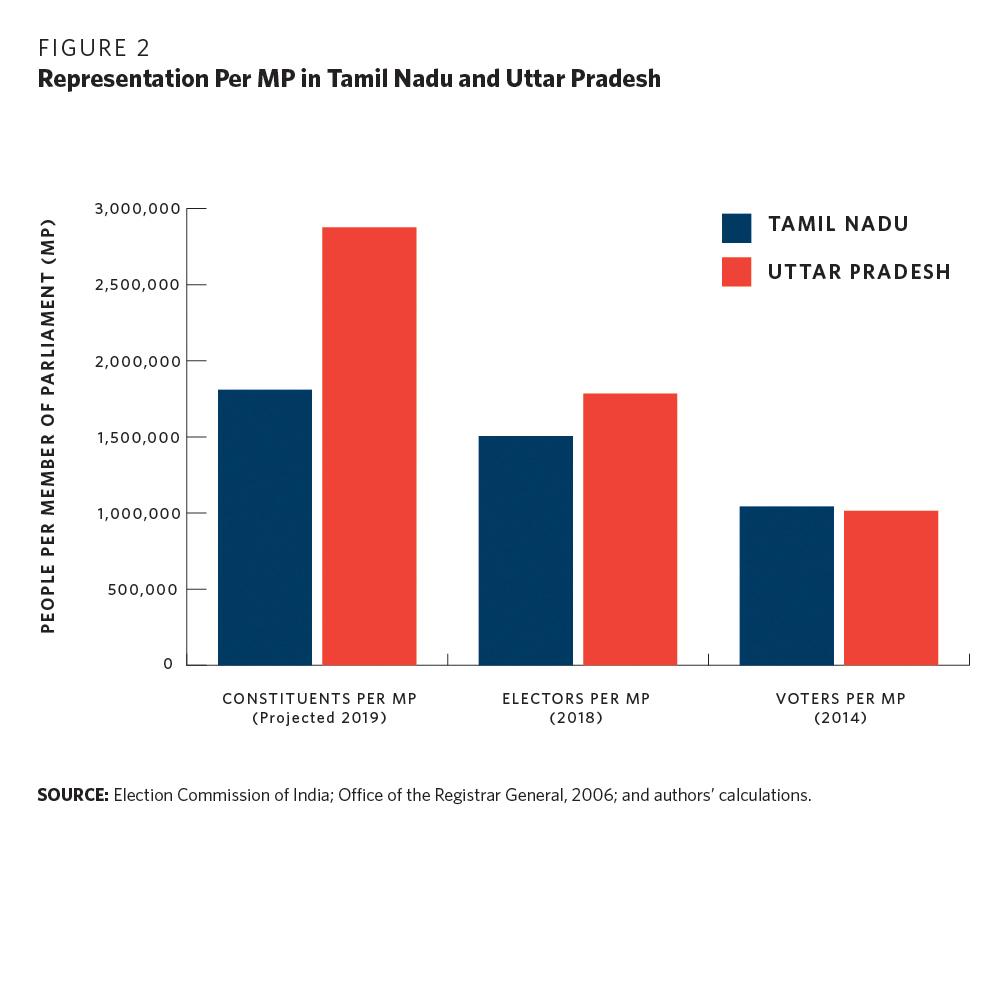
States such as Tamil Nadu, Kerala, Karnataka, and Andhra Pradesh have expressed concerns that delimitation based purely on population could reduce their relative influence in Parliament because these states successfully controlled population growth over several decades.
What is Delimitation?
Delimitation is the process of redrawing the boundaries of Parliamentary and State Assembly constituencies based on population changes. The objective is to ensure that every elected representative represents roughly the same number of people. In India, delimitation is carried out by an independent Delimitation Commission established by Parliament.
The last nationwide delimitation exercise was completed in 2008 based on the 2001 Census. According to current constitutional provisions, the next major delimitation exercise can take place after the first Census conducted after 2026.
Why is Delimitation Controversial?
Population-Based Representation
India’s Constitution generally follows the principle that representation should correspond to population size.
However, states that achieved lower population growth rates fear that they may receive fewer seats relative to rapidly growing states.
North-South Political Debate
Many southern states argue that they should not be politically penalized for successful family planning and development policies. Meanwhile, supporters of population-based delimitation argue that democratic representation must reflect current population realities.
Impact on National Politics
A major redistribution of parliamentary seats could significantly alter:
- Electoral strategies
- Coalition politics
- Federal balance of power
- Regional influence in Parliament
- Resource allocation debates
How Will Delimitation Be Conducted?
The process generally includes:
- Constitution of a Delimitation Commission.
- Use of official Census data.
- Draft proposals for constituency boundaries.
- Public consultations and hearings.
- Publication of final orders.
- Implementation in future elections.
Connection Between Census and Delimitation
The delimitation exercise depends heavily on updated population data.
India began a new Census process in 2026, which is expected to provide the demographic foundation for future constituency redistribution. Population figures from this exercise will play a crucial role in determining seat allocation and constituency boundaries.
Possible Impact of Delimitation 2026
Political Impact
- Redistribution of Lok Sabha seats.
- Change in electoral influence of various states.
- New constituency boundaries.
Administrative Impact
- Redrawing of parliamentary constituencies.
- Reorganization of assembly constituencies.
- Revision of reserved seats for Scheduled Castes and Scheduled Tribes.
Electoral Impact
- Political parties may need to redesign election strategies.
- Candidate selection patterns may change.
- Regional alliances may become more important.
Challenges Ahead for Delimitation 2026 in India
The proposed Delimitation 2026 exercise is expected to be one of the most complex political and constitutional processes in modern India. While delimitation aims to ensure fair representation based on population, it also raises concerns related to federalism, regional balance, governance, and electoral politics. Below are the major challenges in detail.
1. Balancing Population-Based Representation and Federal Equity
The primary objective of delimitation is to ensure that each Member of Parliament represents a roughly equal number of citizens. However, applying this principle strictly creates a challenge for India’s federal structure.
States such as Tamil Nadu, Kerala, Karnataka, Andhra Pradesh, and Telangana have successfully implemented family planning programs and controlled population growth over the past several decades. In contrast, some northern states have experienced significantly higher population growth.
If parliamentary seats are allocated solely on the basis of population, states with higher population growth could gain more seats, while states with lower growth rates may see their relative political influence decline. Many southern states argue that they should not be penalized for successful population control policies.
Why This Is a Challenge
- Potential reduction in the relative influence of developed states.
- Concerns about fairness in national representation.
- Risk of regional dissatisfaction.
2. Growing North-South Political Divide
One of the most debated aspects of Delimitation 2026 is the possibility of widening political differences between northern and southern India.
Southern states contribute significantly to India’s economy, tax revenue, education indicators, and healthcare outcomes. Political leaders from these states have expressed concerns that a population-based seat allocation system could shift more parliamentary power toward northern states with larger populations.
Possible Consequences
- Increased regional political tensions.
- Demands for constitutional safeguards.
- Stronger regional political movements.
- Challenges to national consensus.
3. Dependence on Accurate Census Data
Delimitation relies heavily on census figures because constituency boundaries and seat allocations are based on population statistics.
India’s census schedule was delayed in previous years, making updated demographic information critical for future delimitation exercises. Any discrepancies, undercounting, migration issues, or data disputes could affect the legitimacy of the process.
Risks
- Population estimation disputes.
- Challenges in rapidly urbanizing regions.
- Political disagreements over census methodology.
4. Redrawing Hundreds of Constituencies
India currently has one of the world’s largest democratic systems. Delimitation may require redrawing hundreds of parliamentary and assembly constituencies.
Boundary changes can affect:
- Existing political strongholds.
- Community representation.
- Administrative efficiency.
- Electoral management.
Practical Challenges
- Managing public objections.
- Balancing geographical continuity.
- Ensuring administrative convenience.
- Avoiding excessive disruption to existing constituencies.
5. Political Resistance from States and Parties
Delimitation directly affects political power. Therefore, political parties and state governments are likely to scrutinize every aspect of the exercise.
Parties that believe they may lose influence could oppose proposed changes. Regional parties, in particular, may demand additional safeguards before supporting delimitation reforms.
Potential Outcomes
- Parliamentary debates and delays.
- Demands for amendments.
- Political protests.
- Challenges in building consensus.
6. Expansion of Lok Sabha Seats
Several proposals linked to Delimitation 2026 discuss increasing the number of Lok Sabha seats significantly from the current 543 seats. Some discussions have mentioned figures as high as approximately 850 seats.
Challenges of Expansion
- Need for additional infrastructure.
- Changes in parliamentary procedures.
- Increased administrative costs.
- Requirement for larger parliamentary facilities and support staff.
7. Impact on Women’s Reservation Implementation
The issue of women’s reservation has become linked with the delimitation debate in recent legislative discussions.
Some political groups argue that delaying women’s reservation until after delimitation creates uncertainty, while others believe both reforms should be implemented together. This has made the issue more politically sensitive.
Challenges
- Achieving political agreement.
- Determining reserved constituencies.
- Managing transitions in representation.
8. Urban-Rural Representation Imbalance
India’s urban population has grown rapidly over the last two decades. Many metropolitan areas have experienced substantial population increases compared to rural regions.
Delimitation must account for:
- Urban migration.
- Expanding cities.
- Emerging suburban populations.
- Rural population shifts.
Key Concerns
- Underrepresentation of major cities.
- Overrepresentation of sparsely populated areas.
- Unequal access to political representation.
9. Constitutional and Legal Challenges
Any major delimitation exercise may face legal scrutiny and constitutional challenges.
Questions may arise regarding:
- Seat allocation formulas.
- Census data usage.
- Representation principles.
- Constitutional amendments related to parliamentary seats.
Possible Outcomes
- Court challenges.
- Delays in implementation.
- Need for additional legislative clarification.
10. Maintaining National Unity and Federal Balance
Perhaps the most significant challenge is ensuring that delimitation strengthens democracy without creating perceptions of regional disadvantage.
India’s diversity means that representation must balance:
- Population size.
- Regional interests.
- Economic contributions.
- Federal principles.
- Democratic fairness.
A delimitation exercise viewed as unfair by large sections of the country could generate long-term political tensions. Conversely, a well-designed process could strengthen democratic legitimacy and improve representation across India.
Future Outlook
Delimitation 2026 is expected to be one of the most significant electoral reforms in modern India. The outcome could reshape parliamentary representation, alter political equations, and influence governance for decades. With the Census underway and legislative discussions continuing, the issue is likely to remain at the center of national political debate through 2026 and beyond.
Conclusion
The success of Delimitation 2026 will depend on three critical factors:
- Accurate Census Data
- Political Consensus Across States
- A Fair Balance Between Population and Federal Representation
If these challenges are addressed effectively, Delimitation 2026 could modernize India’s electoral system and improve democratic representation. However, if concerns regarding regional equity and political fairness remain unresolved, the process may become one of the most debated constitutional issues in contemporary India.