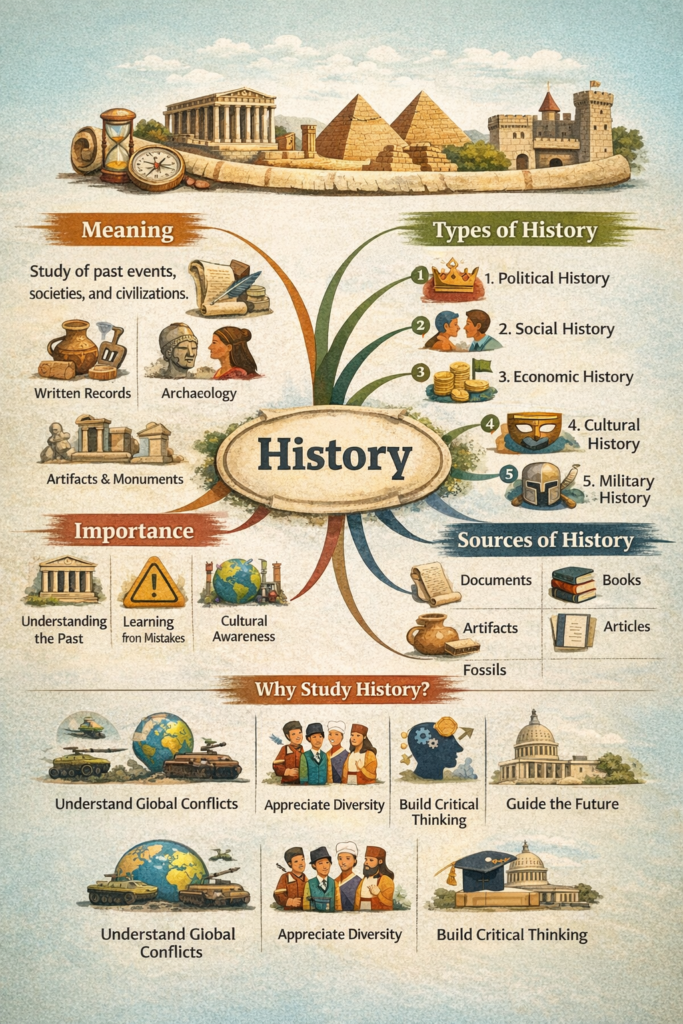
📌 Introduction
History is the study of past events, societies, and civilizations. It helps us understand how the world evolved over time and how human actions shaped the present. The subject of historical period is not just about dates and events—it is about analyzing patterns, cultures, and transformations across time.
The importance of historical period lies in its ability to connect the past with the present and guide the future. By studying historical period, we gain insights into human behavior, decision-making, and societal development.
📌 What is History?
History refers to the systematic study and recording of past events, particularly those related to human civilization. It includes political, social, economic, and cultural developments.
Historians use various sources such as:
- Written documents
- Archaeological findings
- Oral traditions
- Artifacts and monuments
These sources help reconstruct events and provide a clear understanding of the past.
📌 Types of History
History is a vast subject and can be divided into several types:
1. Political
Focuses on governments, rulers, wars, and political events.
2. Social
Deals with daily life, traditions, and cultural practices of people.
3. Economic
Studies trade, industry, and financial systems of past societies.
4. Cultural
Examines art, religion, language, and traditions.
5. Military
Covers wars, battles, and military strategies.
Each type of history provides a unique perspective on human development.
📌 Importance of Historical Period
History plays a crucial role in shaping our understanding of the world. Its importance includes:
✔️ Understanding the Past
Historical Period helps us learn about past civilizations and their achievements.
✔️ Learning from Mistakes
By studying history, we can avoid repeating past errors.
✔️ Cultural Awareness
It promotes understanding of different cultures and traditions.
✔️ Identity and Heritage
Historical Period gives us a sense of identity and belonging.
✔️ Better Decision Making
Historical knowledge helps in making informed decisions for the future.
📌 Sources of History
Historians rely on different sources to gather information:
🔹 Primary Sources
- Manuscripts
- Letters
- Official records
- Archaeological remains
🔹 Secondary Sources
- Books
- Articles
- Research papers
These sources ensure accuracy and authenticity in historical study.
📌 Scope of History
The scope of past events is vast and continuously expanding. It includes:
- Study of ancient, medieval, and modern periods
- Regional and global history
- Interdisciplinary approaches (history + science, history + economics)
History is no longer limited to kings and wars—it now includes common people and everyday life.
📌 Why Study History Today?
In today’s fast-changing world, past events remains highly relevant. It helps us:
- Understand global conflicts
- Analyze political systems
- Appreciate cultural diversity
- Build critical thinking skills
History also plays an important role in education, research, and policymaking.
📌 Conclusion
History is more than just a subject—it is a window into the past that shapes our present and future. By studying history, we not only learn about events but also understand the deeper connections between societies and cultures.
A strong foundation in history helps individuals become more aware, informed, and responsible citizens.
Ultimate
Historical Period
Guide: 7 Key Facts You Must Know
History is the foundation of human knowledge, offering insights into how civilizations evolved over time. It is more than just a collection of dates and events—it is a detailed study of human experiences, achievements, failures, and transformations. Understanding history helps us connect the past with the present and prepares us for the future.
1. History is the Study of the Past
History refers to the systematic study of past events, particularly those related to human societies. It involves analyzing records, artifacts, and narratives to understand how people lived, governed, and interacted. This makes history an essential subject for understanding the roots of modern civilization.
2. History Has Multiple Types
History is divided into several branches, each focusing on a different aspect of human life. Political history examines governments and rulers, while social history explores daily life and cultural traditions. Economic history studies trade and financial systems, and cultural history focuses on art, religion, and customs. These categories help in understanding history from different perspectives.
3. History Helps Us Learn from the Past
One of the most important benefits of studying past events is learning from past mistakes and successes. By understanding historical events, individuals and societies can make better decisions and avoid repeating errors. This makes history highly relevant in modern times.
4. Sources of History Provide Evidence
Historians rely on primary and secondary sources to study the past. Primary sources include original documents, inscriptions, and artifacts, while secondary sources include books and research papers. These sources ensure that historical interpretations are accurate and reliable.
5. History Builds Cultural Awareness
Studying past events promotes understanding and respect for different cultures and traditions. It helps people appreciate diversity and recognize the contributions of various civilizations to the modern world.
6. History Develops Critical Thinking
History encourages analytical thinking by requiring individuals to evaluate evidence, compare perspectives, and interpret events. This skill is valuable not only in academics but also in everyday decision-making.
7. History Shapes the Future
History plays a crucial role in shaping the future by providing lessons and guiding principles. Governments, policymakers, and educators use historical knowledge to make informed decisions and plan for sustainable development.
Conclusion
History is an essential subject that goes beyond memorizing facts. It helps us understand human behavior, societal changes, and cultural evolution. By learning past events, we gain valuable insights that shape our present and influence our future. This ultimate guide highlights the key facts you must know to build a strong foundation in past events and appreciate its importance in everyday life.